


Both programs are rooted in community engagement and education, but they offer different levels of structure, responsibility, and independence.
Teaching Immersion
The Teaching Immersion program is designed for participants who want a meaningful, hands-on experience while still having the time and flexibility to explore Bali.
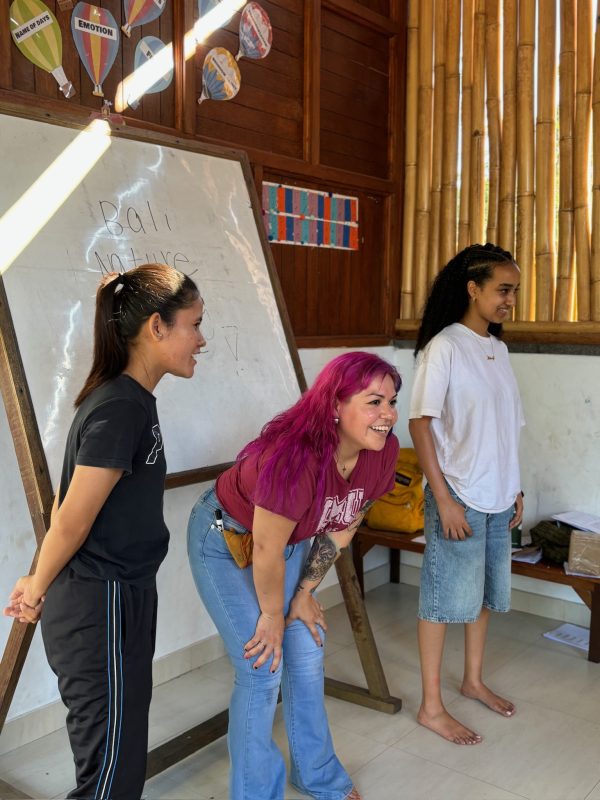
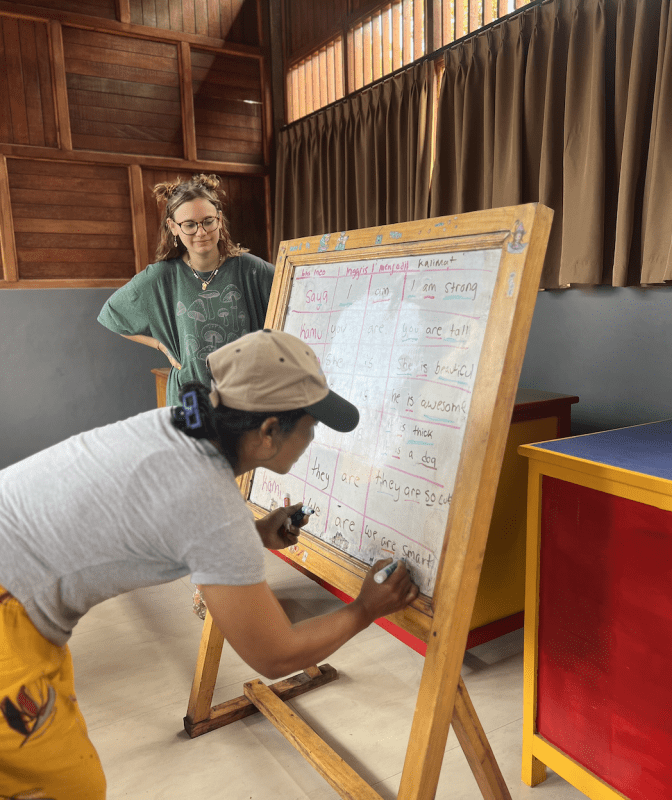
Participants support English classes at our learning center and engage with students in a more relaxed, supportive role. Outside of teaching hours, there is more free time during the week in addition to weekends, allowing you to travel, join cultural activities, and experience daily life in Bali.
This program is a great fit if you are looking for a balance between volunteering and personal experience, and are comfortable being more independent outside of scheduled programming.
Social Impact Internship
The Social Impact Internship is a more structured and immersive experience for participants who want to take on a deeper role within the organization.
In addition to supporting in the classroom, interns work on specific projects that contribute to the long-term growth of the foundation. This may include program development, curriculum design, research, marketing, or other organizational initiatives depending on your focus.
This program requires a higher level of commitment, initiative, and leadership, and is ideal for those looking to gain professional experience while contributing to long-term impact.
To Simplify It:
Teaching Immersion = more flexibility + more time in the classroom + more free time
Social Impact Internship = more structure + more responsibility + more involvement in nonprofit work
If you are looking for a flexible, experience-based program with more free time and a balance between volunteering and exploring on your own, Teaching Immersion is likely the best fit. It is also an 8 week commitment so it is often better for long term travelers and gap year students.
If you are looking for a more structured, resume-building experience where you can take on responsibility, develop skills, and contribute to long-term projects, the Social Impact Internship may be a better fit. This program is 4 weeks on the ground and 4 weeks remote, so if you have a busy schedule or are a university student this program will likely fit better into your busy lifestyle.
Each program is designed to balance meaningful work with time to explore and experience Bali.
Both programs include structured program hours during the week, with time spent at the learning center and participating in program activities.
The Teaching Immersion program focuses primarily on time in the classroom, with approximately 15–20 hours per week spent teaching. Outside of the classroom, the schedule is lighter, allowing for more flexibility during the week.
The Social Impact Internship includes a more structured schedule with both teaching and project-based work. Interns spend approximately 10 hours per week in the classroom and around 20 hours per week working on project-based assignments that support the organization.
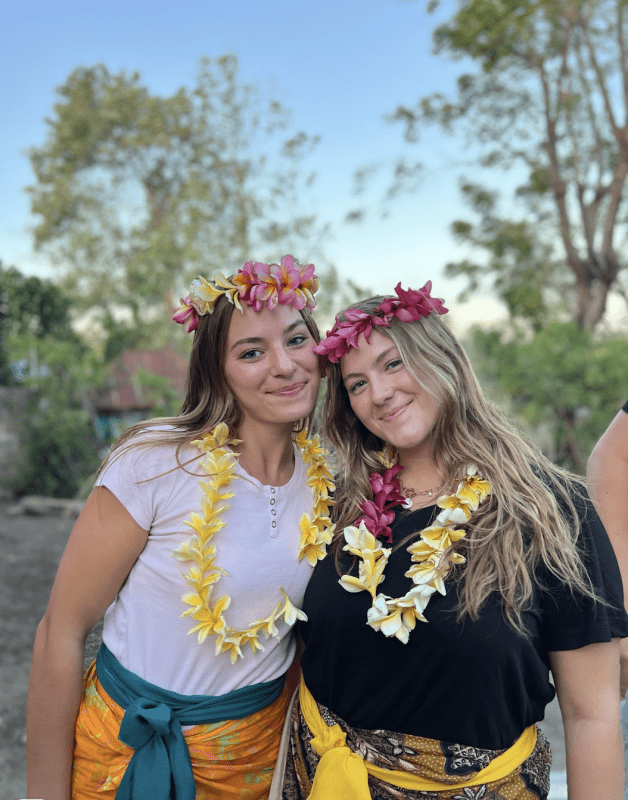
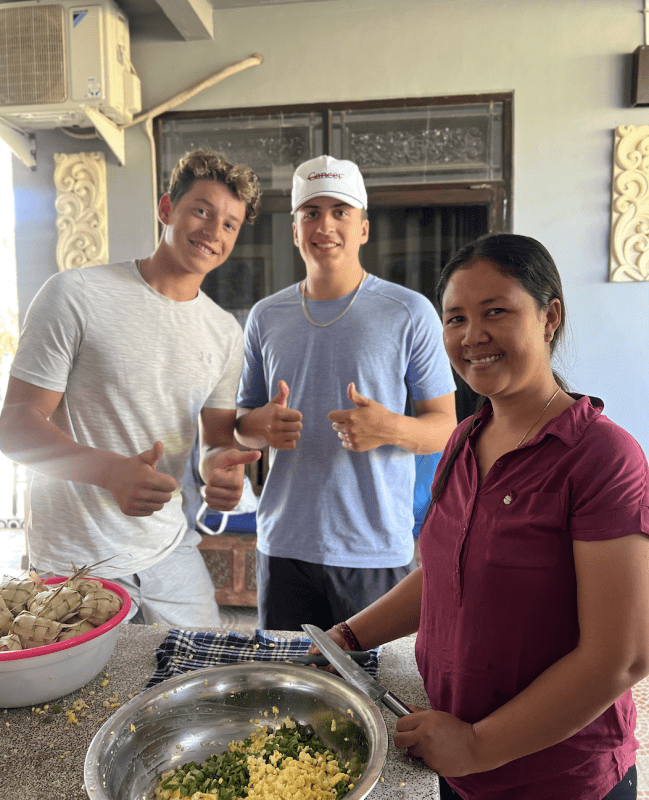
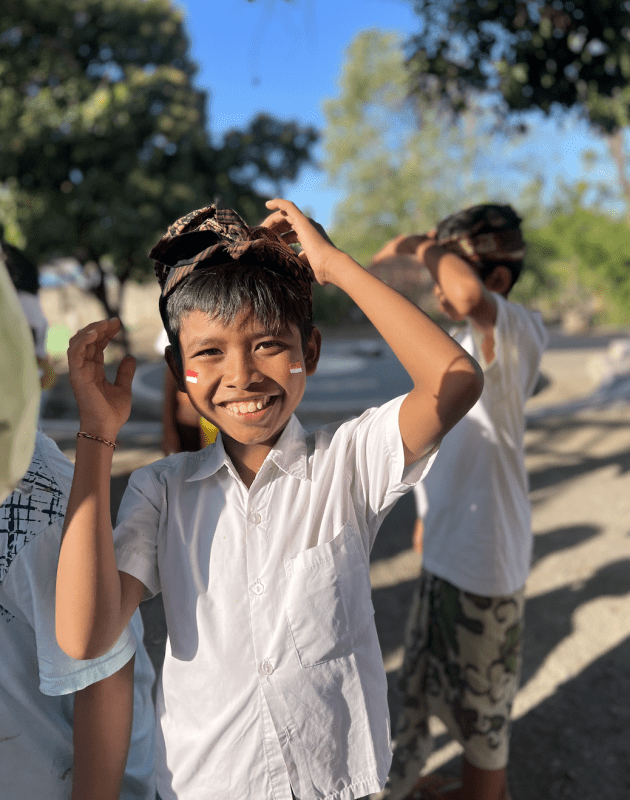
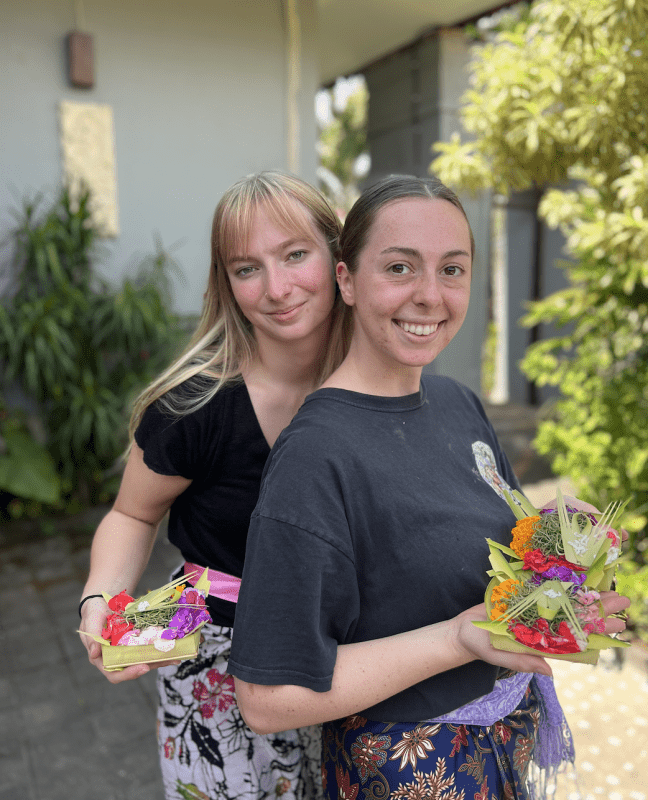
Both programs also include weekly immersion activities within the local community, as well as a larger field trip-style experience each Friday.
All participants have free time from Friday afternoon through Sunday evening and are encouraged to explore the island!
Teaching Immersion is best suited for those looking for a meaningful experience with flexibility, who are comfortable being independent and want time to explore Bali. (Typically gap year students or individuals doing long term travel).
The Social Impact Internship is best suited for those looking for a more structured, professional experience, and who are ready to take initiative, commit to projects, and contribute to long-term impact. (Typically university students and those seeking shorter term commitment).
You will be part of a cohort of participants joining the program at the same time, creating a shared experience and built-in community during your time in Bali.
Our Teaching Immersion program is typically 3-5 participants per cohort, while our Social Impact Internship typically ranges from 5-10 interns per cohort.